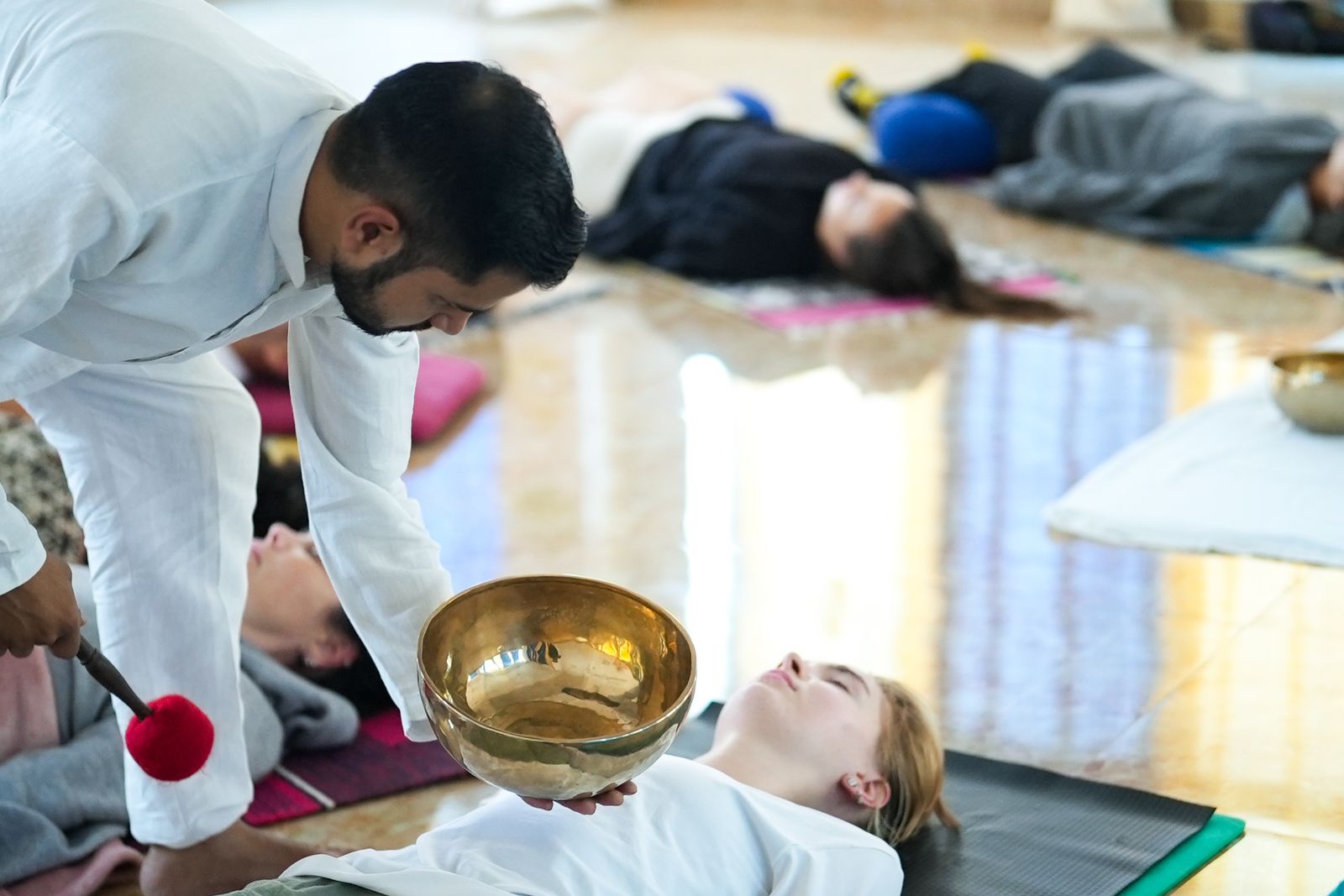
This autumn, sound baths are everywhere. What used to be a niche practice in the back room of a yoga studio now shows up in corporate offices, hotel spas, concert halls and even churches. Sessions sell out. The sound-healing market is measured in billions.
There's a reason the timing is not random. The wellness industry spent the last two years telling everyone to optimise their sleep and their nervous systems with trackers, rings, supplements and elaborate routines — and 2026 is the year of the hangover from that. The Global Wellness Institute now describes the shift as one "from sleepmaxxing to simplicity," and clinicians have a name, orthosomnia, for the anxiety people develop from chasing perfect sleep scores. We wrote about that spiral in sleepmaxxing: what actually works.
Against that backdrop, lying on the floor for 45 minutes doing absolutely nothing while someone plays a gong looks very appealing. So: does it work? Partly yes — and the parts that work are not the parts the marketing shouts about.
What a Sound Bath Actually Is
You lie down, usually with a blanket and a pillow, and a practitioner plays sustained tones — Tibetan or crystal singing bowls, gongs, chimes — for anywhere from 20 to 60 minutes. There's no melody to follow, no beat, no lyrics. Tones swell, overlap and decay. Nothing is asked of you except to stay there.
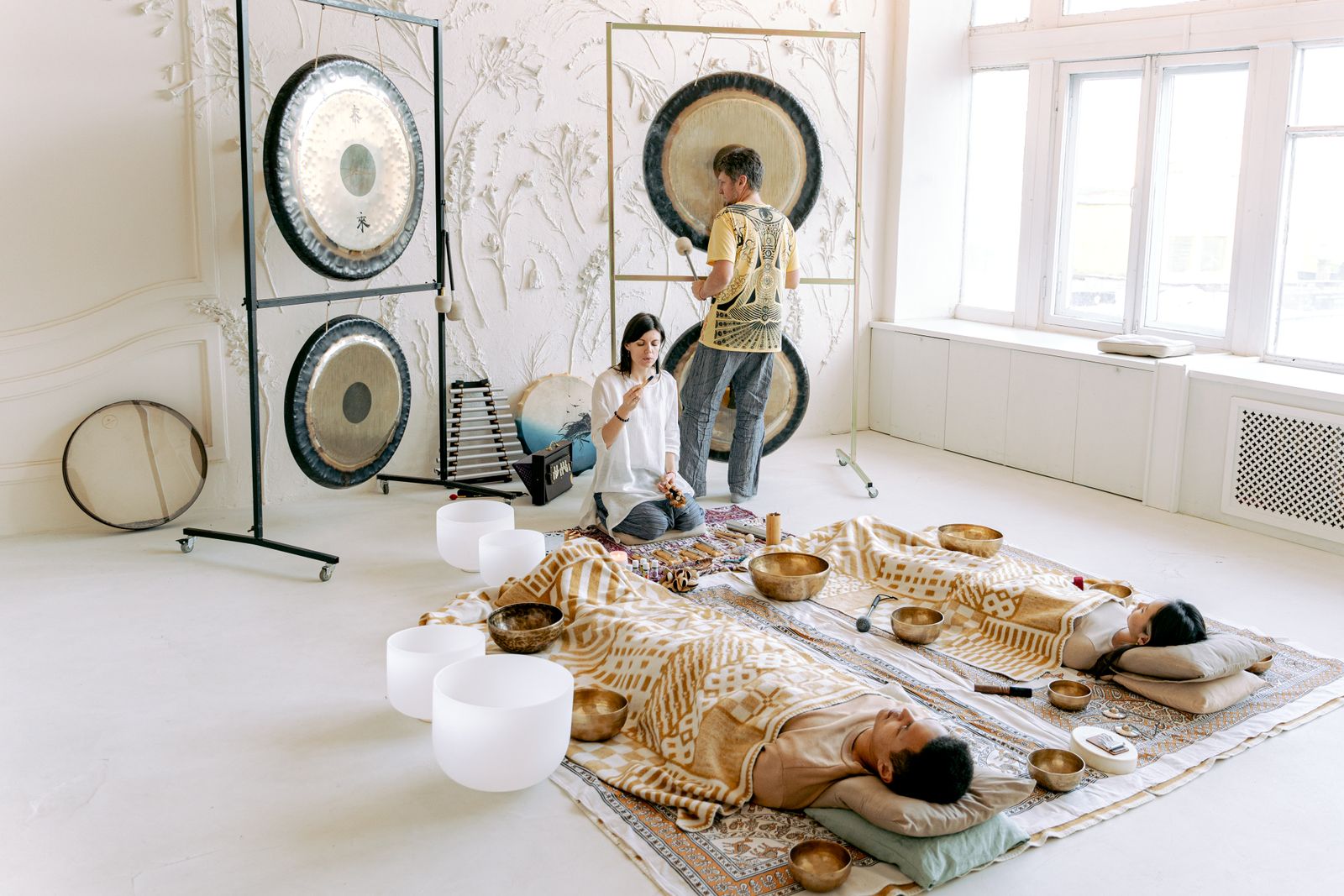
That last part matters more than most people notice. A sound bath is one of the few wellness activities with no performance metric attached. Nothing measures you, nothing scores you, and there's no way to do it wrong.
What the Research Supports
The evidence base is small but not empty, and it points in a consistent direction: a single session reliably makes people feel calmer right afterwards.
- Mood and tension drop measurably. In an often-cited study of 62 participants, people reported significantly less tension, anger, fatigue and depressed mood after a singing-bowl meditation. Worth knowing: that study was observational, not randomised — everyone knew what they were getting.
- It holds up against an established method. A later randomised controlled trial put Tibetan singing bowls against progressive muscle relaxation — a standard clinical relaxation technique — in people with high state anxiety. The bowls produced a comparable acute relaxation response, measured in the body, not just on a questionnaire.
- The effects studied are acute. Nearly all of this research looks at how you feel immediately after one session. That's a real effect, and it is also a modest claim: nobody has shown that a monthly gong session changes your health over a year.
In other words, treat a sound bath the way you'd treat a long walk or a hot bath: a reliable way to downshift for an hour, not medicine.
What the Research Doesn't Support
Now the part the flyers get wrong. Sound healing comes wrapped in very specific numerical claims, and those claims are where it falls apart.
- "Solfeggio frequencies" are numerology, not biology. The famous set of tones — 528 Hz "repairs DNA," 741 Hz "removes toxins" — was derived in the 1970s from the numbers of Bible verses. The medieval solfège syllables they reference are real; the frequencies attached to them are a twentieth-century invention with no experimental support whatsoever.
- 432 Hz is not a magic tuning. The strongest evidence for it is underwhelming: a 2025 randomised crossover trial compared music tuned to 432 Hz against 443 Hz and found both lowered heart rate, with a median drop of about three beats per minute versus one. That's a hint that some people find it marginally more pleasant — not proof of a healing frequency.
- Binaural beats are real, but ordinary. A meta-analysis pooling 22 studies found a moderate effect on memory, attention, anxiety and pain — useful, but in the same range as plenty of unglamorous interventions. Two practical details from that work: listening before a task beats listening during it, and there's no need to bury the beats under white noise.
The honest summary: the sound is doing something, the specific number on the label almost certainly isn't.
So What's Actually Doing the Work?
Strip away the mysticism and three plain mechanisms are left — the same ones that make a thunderstorm outside your window so easy to fall asleep to.
Predictability. Your brain is built to orient toward sudden, unexpected sounds. Long, slow, overlapping tones are the opposite of sudden. After a minute or two there's nothing left to brace for, and the startle response stops firing.
Masking. A continuous sound raises the acoustic floor, so the door slam, the notification and the neighbour's conversation stop poking through. This is the same reason steady noise helps concentration, which we covered in the best background sounds for focus and study.
A place to put your attention. Meditation is difficult mostly because "focus on nothing" is a bad instruction. A tone that swells and fades gives attention something to rest on, which is why sound is such a forgiving entry point into a meditation practice.
None of those three require a $60 ticket or a crystal bowl. They require a continuous, non-verbal, slowly changing sound and twenty undisturbed minutes.
How to Do It at Home
Here's a version you can run tonight with what you already have.
- Set a timer for 20 minutes and put your phone face down. The timer is what lets you stop watching the clock.
- Pick sounds with no events in them. Steady rain, ocean waves and a river work beautifully; white noise and pink noise are the most neutral options if any nature texture pulls your attention. Skip anything with birds, voices or traffic for this — save those for working hours.
- Layer two or three, quietly. Distant thunder under rain, or wind under crickets, gives you the swell-and-decay quality that makes bowls pleasant to listen to. Keep the total volume low enough that you could still hear someone say your name.
- Lie down, don't sit at your desk. The posture is doing part of the work.
- Don't measure it. No tracker, no heart-rate screenshot, no scoring the session afterwards. That impulse is precisely the thing 2026 is recovering from.
If you'd rather be led than build your own mix, our Horizon page runs a slow, continuous day-to-night soundscape in the browser — press play, leave it, close your eyes.
The Simple Version of a Complicated Trend
Sound baths became a 2026 phenomenon because they offer something the optimisation era took away: an hour with nothing to improve. The instruments are lovely and the frequency charts are nonsense, and you can have the useful part of the experience — the calming, the masking, the permission to stop — with a steady soundscape and a closed door.
The sounds we grew up finding restful still do the job. Nature sounds work for reasons that have nothing to do with mysticism, and they're free.
Want to try it right now? Open the web mixer and build a quiet rain-and-thunder layer, or get Noizio for iPhone, iPad and Mac to keep your mixes, set a sleep timer and run the whole thing offline.