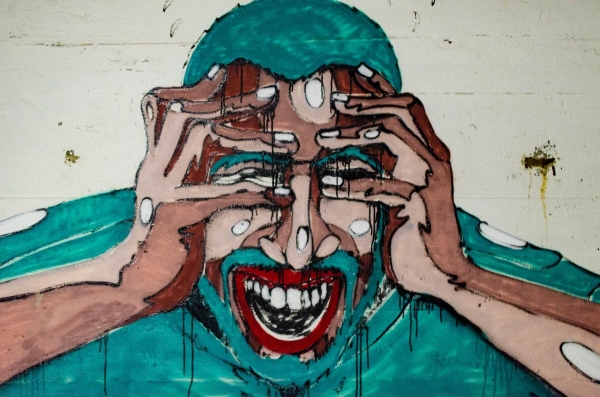
Almost everyone gets nervous before a job interview, a first date or a wedding toast. That's normal, and a little adrenaline often helps. Social anxiety is different: it's when the fear of being judged starts making decisions for you — which invitations you accept, whether you speak up in meetings, whether you make the phone call at all.
The good news: it's one of the better-understood anxiety problems, and the methods that help are well tested.
Shyness, Nerves or Social Anxiety Disorder?
Shyness is a temperament; plenty of shy people take a while to warm up but live full social lives. Social anxiety sits on a spectrum, and at the far end is social anxiety disorder, a diagnosis defined in the DSM-5, the manual clinicians use in the US. Its core features are:
- marked fear of social situations where you might be watched or evaluated by others;
- fear that you'll act in a way, or show anxiety symptoms, that leads to embarrassment or rejection;
- those situations are avoided or endured with intense discomfort, out of proportion to the real risk;
- the pattern is persistent, typically lasting six months or more, and it causes real distress or gets in the way of work, school or relationships.
The US National Institute of Mental Health (NIMH) describes it as more than just shyness: the fear is intense, persistent and often feels uncontrollable. Based on the National Comorbidity Survey Replication, NIMH estimates that about 7.1% of US adults had social anxiety disorder in the past year, and 12.1% experience it at some point in their lives. It usually begins in childhood or adolescence.
Common Signs
Social anxiety shows up in the body, in your thinking and in what you do:
- Situations: speaking up in meetings, phone calls, eating in front of others, meeting new people, being watched while you work.
- Body: blushing, sweating, trembling, a racing heart, nausea, your mind going blank.
- Thoughts: expecting the worst, picturing how awkward you must look, then replaying the conversation for hours afterward.
- Behavior: avoiding, leaving early, rehearsing sentences, hiding behind your phone.
Where It Comes From — and Why It Sticks
There's rarely a single cause. Social anxiety tends to run in families, and NIMH notes that genes appear to influence how the brain regions involved in fear work. Researchers are still studying how much stress and environment add to that.
What keeps it going is better understood. In 1995, psychologists David M. Clark and Adrian Wells published a cognitive model of social phobia that still shapes treatment today. It describes a few loops that keep the fear alive:
- Self-focused attention. Your attention turns inward, and you treat feelings as evidence of how you look: "I feel hot, so I must be bright red." Meanwhile you miss the neutral or friendly reactions around you.
- Safety behaviors. Avoiding eye contact, gripping a glass so your hand won't shake, scripting every sentence. They feel protective, but they stop you learning that the disaster wouldn't have happened anyway — and can make you seem distant.
- Before and after. Anxious anticipation, then a harsh "post-mortem" that replays a few awkward seconds until they feel like the whole evening.
- Avoidance. Skipping the event brings instant relief, which teaches your brain the situation really was dangerous.
Other people also notice far less than you think. In a well-known Cornell study, Thomas Gilovich, Victoria Medvec and Kenneth Savitsky (2000) had students join a room of peers wearing an embarrassing Barry Manilow T-shirt. The wearers guessed about half the room noticed; fewer than a quarter did. That's the spotlight effect, and anxiety turns it up.
Self-Help That Has Evidence Behind It
Cognitive behavioral therapy (CBT) is the first-line treatment. NIMH calls it the "gold standard" for social anxiety, and the UK's NICE guideline CG159 recommends individual CBT developed specifically for social anxiety, with CBT-based supported self-help for people who don't want face-to-face therapy. These techniques come from that tradition:
- Build an exposure ladder. List situations from mildly to very uncomfortable — asking a shop assistant a question near the bottom, a short talk near the top. Start low and repeat each step until it feels manageable. The goal isn't zero anxiety; it's learning that you can feel anxious and still cope.
- Drop one safety behavior on purpose. In a small 1995 study, Adrian Wells, David Clark and colleagues found that exposure combined with dropping safety behaviors reduced anxiety and belief in the feared outcome more than exposure alone. Make eye contact, let a pause happen, don't over-rehearse — and see what actually follows.
- Turn your attention outward. Focus on what the other person is saying. It's hard to monitor yourself while you're genuinely curious about someone else.
- Test your predictions. Before a situation, write down what you expect ("I'll go blank and they'll think I'm incompetent"). Afterward, write down what happened. Over time the gap between the two becomes hard to ignore.
- Cut the post-mortem short. Notice when you're replaying a conversation; if there's a lesson, write one line and move on.
- Use slow breathing before and after. A 2018 systematic review led by Andrea Zaccaro in Frontiers in Human Neuroscience found that slow breathing (under ten breaths a minute) was associated with greater relaxation and lower anxiety and arousal. Use it to settle before an event or come down afterward — just don't let it become something you must do to survive the situation, or it turns into another safety behavior.
Where Calming Sound Fits
No soundtrack treats social anxiety. But sound can make the practical parts easier. A steady, non-musical background — soft rain, slow ocean waves or a flowing river — gives you something even to breathe along with before a difficult event, and an easy way to decompress after a draining day instead of replaying every sentence. And since a rough night makes anxiety harder to handle, a steady sound like brown noise at bedtime can help by masking the small noises that wake you. Our pieces on building a meditation habit and why nature sounds feel relaxing go deeper.
When to See a Professional
Self-help works best for mild to moderate social anxiety. Talk to a doctor or a licensed therapist if:
- the fear has lasted for months and isn't easing;
- you're turning down work, study or relationships because of it;
- you rely on alcohol or other substances to get through social situations;
- you also feel persistently low, hopeless or exhausted (if it's mostly about work, see our guide to professional burnout).
Effective treatment exists: besides CBT, which a therapist can tailor far better than any article, NIMH notes that some medications, including SSRIs, can help. If you ever have thoughts of harming yourself, contact emergency services or a crisis line right away — in the US, call or text 988.
Social anxiety is common, it isn't a character flaw, and it responds to practice. Small, repeated steps beat one heroic leap.
If a calm sound helps you breathe before a hard conversation or unwind after one, you can mix ambient sounds free in your browser, or use the Noizio app for Mac and iOS to layer its 40+ sounds into your own mix.