
In elite sport, fatigue isn't the enemy — it's the point. Hard training creates fatigue, and the body adapts while it recovers. The problem is fatigue that isn't managed: it piles up, performance slips, and injury and illness follow. That's why top athletes and their coaches plan recovery as carefully as the training itself. Here's what that looks like, what the research says, and what anyone with a demanding schedule can borrow.
Sleep: The Recovery Tool Everyone Underuses
The study that put sleep on coaches' radar came from Stanford. Cheri Mah and colleagues (2011) asked 11 players on the Stanford men's basketball team to spend at least ten hours in bed each night for five to seven weeks. They ended up sleeping almost two hours more per night on average, and performance moved with it: sprint times over 282 feet dropped from 16.2 to 15.5 seconds, free-throw and three-point accuracy each rose by about 9%, reaction times got faster, and players reported more vigor and less fatigue. It was a small study with no control group, but it's a vivid demonstration of how much performance sleep can unlock.
Elite athletes often sleep worse than you'd expect. When researchers at St Mary's University in London (Leeder and colleagues, 2012) tracked 47 Olympic athletes and 20 non-athletes with wrist monitors, both groups spent a similar time asleep, but the athletes slept less efficiently — about 81% of their time in bed versus 89%. Early sessions, travel, unfamiliar hotel rooms and competition nerves can all chip away at it.
Short sleep may also raise injury risk. In a study of 112 adolescent athletes, Matthew Milewski and colleagues (2014) found that those sleeping less than eight hours a night were about 1.7 times as likely to be injured, after adjusting for other factors.
The fixes are mostly unglamorous: consistent bed and wake times, short naps on double-session days, dark rooms, and managing noise on the road. A steady sound like white noise or rain is a simple way to make an unfamiliar hotel room sound like home.

Planning Fatigue: Periodization and Overreaching
Training plans are built in cycles — harder blocks followed by lighter weeks, with a taper before key competitions. This is periodization, and its purpose is to keep fatigue temporary.
A joint consensus statement from the European College of Sport Science and the American College of Sports Medicine (Meeusen and colleagues, 2013) describes a continuum. Functional overreaching is a short, planned dip in performance that turns into improvement after recovery. Non-functional overreaching happens when training and recovery fall out of balance and the dip drags on. At the far end is overtraining syndrome, a more severe, longer-lasting state. The statement notes that no single blood test or marker reliably diagnoses it, so coaches watch several signals together: performance, mood, sleep and how hard training feels.
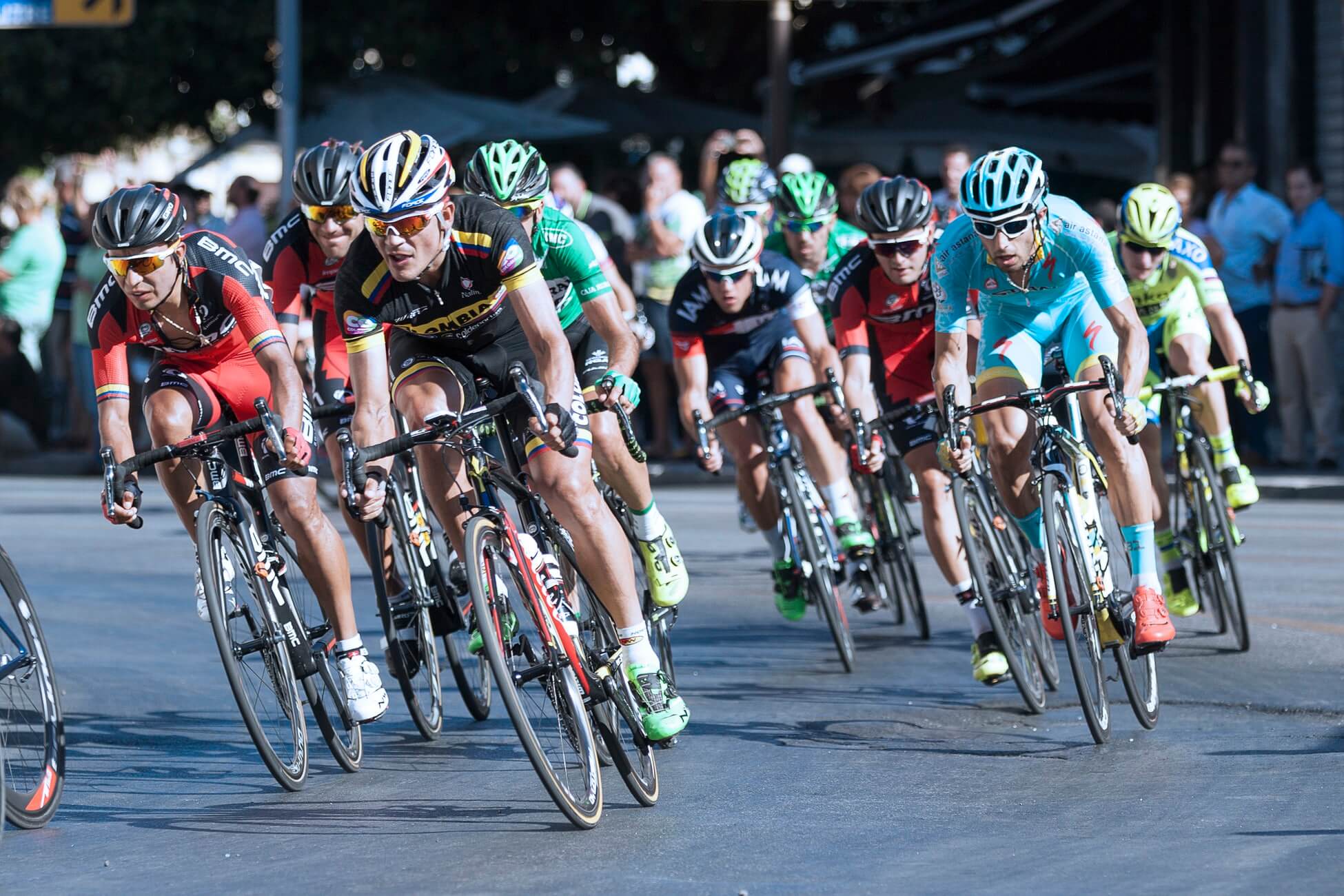
Fuel and Fluids
An easily missed cause of fatigue is simply eating too little for the training load. The International Olympic Committee has addressed this since 2014 under the name relative energy deficiency in sport (REDs): when energy intake consistently falls short of what training demands, the consequences can include fatigue, more frequent illness, hormonal disruption, weaker bones and poorer performance. The 2016 joint position statement on nutrition and athletic performance, from the Academy of Nutrition and Dietetics, Dietitians of Canada and the American College of Sports Medicine, makes the broader point: the type, amount and timing of food and fluid all shape both performance and recovery.
Hydration matters too. The American College of Sports Medicine's 2007 position stand on fluid replacement advises drinking enough during exercise to avoid losing more than 2% of body weight to dehydration. Because sweat rates vary widely between people, weighing yourself before and after training is the simplest way to learn your own needs.
Recovery Methods: What's Worth It
Massage guns, ice baths, compression boots — the recovery market is crowded. A 2018 meta-analysis in Frontiers in Physiology by Olivier Dupuy and colleagues compared post-exercise techniques and found massage the most effective for reducing muscle soreness and perceived fatigue. Active recovery, compression garments, water immersion, contrast water therapy and cryotherapy also reduced soreness, with effects ranging from small to large.
The practical lesson: sleep, food, fluids and a sensible training load do most of the work. Recovery tools are the last few percent, not a substitute.
Mental Fatigue Is Fatigue Too
Tiredness isn't only in the muscles. In a 2009 study in the Journal of Applied Physiology, Samuele Marcora, Walter Staiano and Victoria Manning had 16 people spend 90 minutes either on a demanding cognitive task or watching neutral documentaries, then cycle to exhaustion. After the mental work, they gave up about 15% sooner. Their hearts and muscles responded the same way; the exercise simply felt harder.
For athletes, that means travel, media duties, screens and long tactical meetings are part of the load, which is why many protect their downtime with breathing exercises or meditation — the habit we cover in why meditation is worth practicing. For everyone else, it's a reminder that a draining day at the desk is a legitimate reason a workout feels harder.
Music: Before, During and After
Costas Karageorghis, a sport psychologist at Brunel University London, has studied music in sport and exercise for many years. His work distinguishes music used before a session to psych up or calm down, music played during exercise — either in the background or synchronized to the rhythm of movement — and music used afterward to aid recovery.
The largest summary of the evidence is a 2020 meta-analysis in Psychological Bulletin by Peter Terry, Karageorghis and colleagues, covering 139 studies and about 3,600 participants. Music was associated with more positive feelings during exercise, better physical performance, lower perceived exertion and more efficient oxygen use, though not with any change in heart rate. The performance effects were stronger in everyday exercise than in competitive sport.
After training, the goal flips from arousal to downshifting. Slow, steady sounds like ocean waves or a gently flowing river make an easy backdrop for a few minutes of slow breathing or an evening wind-down. For how music affects the brain at work and study, see how music influences learning and productivity.
What Anyone Can Borrow
- Treat sleep as training. Consistent hours beat heroic catch-up; our tips on getting up early without feeling wrecked help.
- Plan hard and easy days. Not every day can be maximal, at work or in the gym.
- Eat and drink enough. Under-fueling can feel a lot like low motivation.
- Count mental load. A brutal workday is part of your training stress.
- Use sound deliberately. Upbeat music to get going, calm sound to come down.
For the calm half of that equation, the Noizio app for Mac and iOS mixes 40+ ambient sounds — a steady layer to mask a noisy hotel room, or a slow one to wind down after a hard session. You can also try the free web mixer.