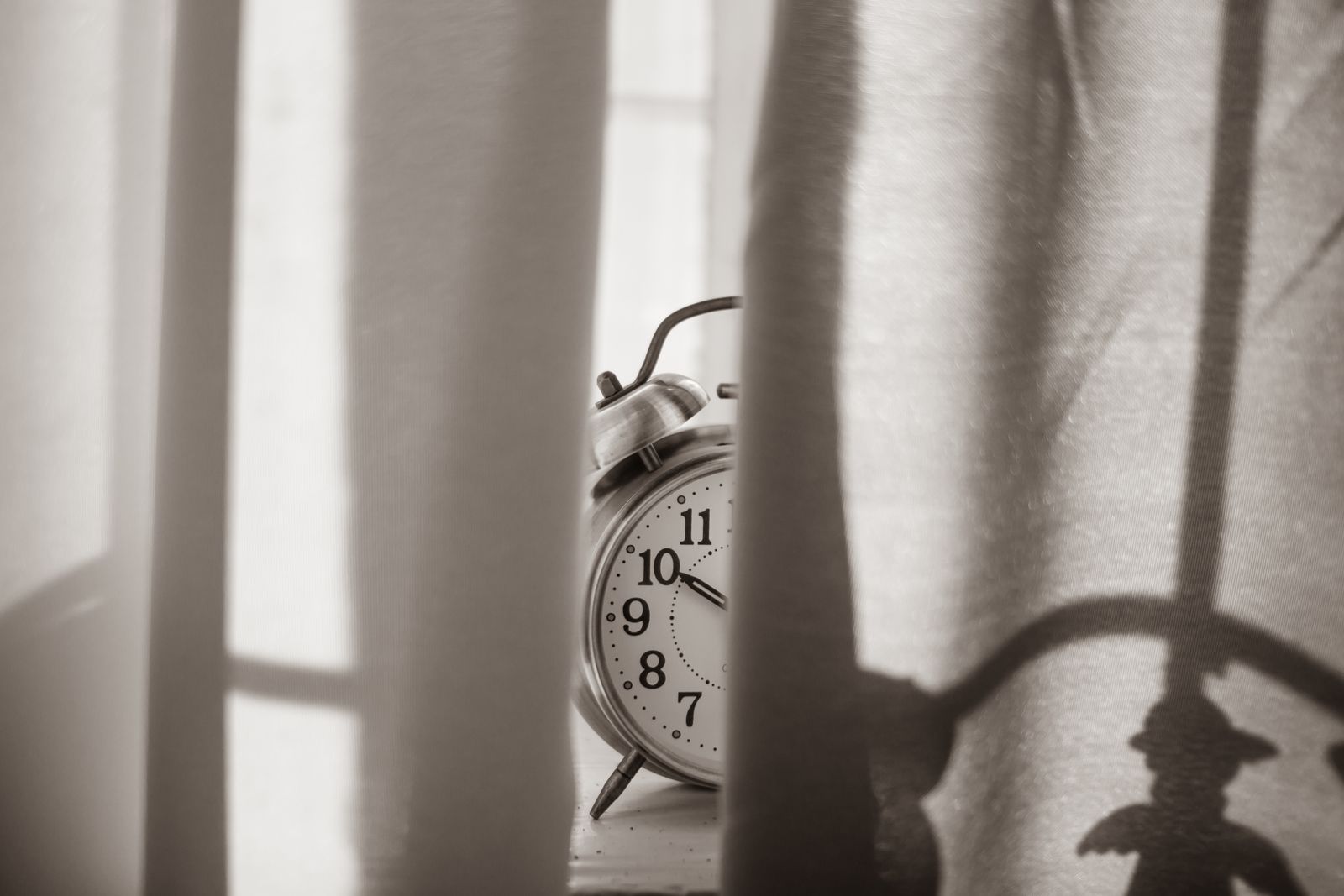
The EU and the UK set their clocks back an hour on Sunday, October 25. The US and most of Canada follow on Sunday, November 1. The headline is always the extra hour. Yet plenty of people feel off for days, and parents discover the extra hour went to a toddler who now starts the day at 5 a.m.
The extra hour lasts one night; timing is where sleep research has been heading. The 2026 version of good sleep advice is less about more hours and more about sleep regularity: sleeping and waking at roughly the same times, day after day.
What Falling Back Does to Your Body Clock
Your internal clock doesn't read the clock on the wall. It sets itself mainly by light, and on the morning of the change the sun rose exactly when it would have anyway. Only the numbers moved. That has predictable effects:
- Early risers and kids wake an hour earlier by the clock. A body that woke at 6:00 without an alarm now wakes at 5:00. The extra hour only helps people who can sleep in.
- Evenings feel longer. Your usual 11 p.m. bedtime is now what your body still considers midnight, so you may get sleepy on the sofa at 9:30.
- Mornings get lighter and evenings darker. Sunrise and sunset both arrive an hour earlier by the clock, so daylight reaches the bedroom sooner and the commute home happens in the dark.
The good news: this is the easier of the two yearly changes. In a 2007 Current Biology study, Kantermann, Roenneberg and colleagues at Ludwig Maximilian University of Munich tracked 50 people for eight weeks around each transition. Sleep and activity adjusted readily in autumn; activity timing didn't adjust in spring, especially in night owls.
Sleep scientists also prefer the clock that autumn brings back. In a 2020 position statement in the Journal of Clinical Sleep Medicine, the American Academy of Sleep Medicine (Rishi and colleagues) called for ending seasonal clock changes in favor of permanent standard time, citing evidence that the spring switch raises the risk of cardiovascular events, mood disorders and car crashes. The academy restated that position in 2024.
Autumn isn't harmless, though. Hansen and colleagues in Denmark analyzed 185,419 hospital contacts for depression from 1995 to 2012 (Epidemiology, 2017). The switch to standard time was associated with an 11% rise in new depressive episodes that faded over about ten weeks, and the authors suggest the distress of a suddenly earlier sunset may explain it. It's observational data from one country and can't prove cause, but a low mood that lingers into winter is worth raising with a doctor.
Why Sleep Regularity Is the Bigger Story
The Sleep Regularity Index (SRI) comes from a 2017 Scientific Reports paper by Phillips and colleagues at Brigham and Women's Hospital and MIT. It measures the probability that you're in the same state, asleep or awake, at any two moments 24 hours apart. Identical sleep and wake times every day score 100; a random pattern scores 0.
In that study, 61 Harvard College undergraduates kept sleep diaries for 30 days. In the least regular sleepers, melatonin, the hormone that signals biological night, rose about two and a half hours later than in the most regular ones, even though both groups averaged a little over seven hours of sleep a day. More regular sleep also went with higher grades. Small study, clear message: the same hours at erratic times aren't the same sleep.
In 2024, Windred and colleagues at Monash University published an analysis in SLEEP of 60,977 UK Biobank participants who each wore a wrist accelerometer for a week. Over an average follow-up of about six years, 1,859 of them died. Compared with the least regular fifth of sleepers, the other four fifths had a 20% to 48% lower risk of death from any cause, after adjusting for age, sex and other sociodemographic, lifestyle and health factors. Regularity predicted mortality better than sleep duration did.
The limits matter. Irregular sleep can be a marker of shift work, illness or other hardship, and a week of tracking is a snapshot, so this doesn't prove a fixed schedule adds years. It does suggest that when you sleep deserves as much attention as how long.

A Plan for the Week After the Change
A clock change is a small, forced irregularity; the goal is not to add your own. In the EU and the UK you're already in the week after. In North America, start a few days before November 1.
- Fix your wake time. Pick one on the new clock and keep it every day, weekend included. Bedtime tends to follow. If you wake early, rest quietly instead of starting the day.
- Get daylight soon after you wake, not before. Morning light nudges the body clock earlier; evening light nudges it later. If you're waking too early, keep the bedroom dark until your target time, then get outside or sit by a window.
- Dim the evenings. For the last hour or two before bed, switch to low, warm lamps and dim your screens.
- Shift kids gradually. Pediatric sleep specialists typically suggest 15-minute steps every day or two. In North America, push bedtime and wake time later in those steps before the change. In the EU and the UK, start with bedtime 30 minutes earlier than usual on the new clock, then move it 15 minutes later every couple of nights. Blackout curtains help with the 5 a.m. starts.
- Keep caffeine early and naps short. Dark afternoons make a 4 p.m. coffee tempting, but late caffeine pushes sleep later. Keep naps short and early; an evening doze on the sofa eats into the sleep pressure you need at bedtime.
Where Sound Fits, Honestly
Sound won't reset your body clock; light and timing do that. A steady soundscape can support the routine:
- A consistent wind-down cue. Play the same sound at the start of your wind-down every night and it becomes a signal that the day is over, much like a bedtime story. Soft rain or ocean waves are enough.
- Masking the early hour. For a week or so, the house may wake first: a toddler up at 5, a partner whose body hasn't shifted yet. A low layer of pink noise or brown noise can blur the clatter from the kitchen.
- A sleep timer. Most people only need sound while falling asleep. A timer that fades it out keeps it from playing all night.
- Quiet and distant for babies. The American Academy of Pediatrics notes on HealthyChildren.org that some infant sleep machines can produce hazardous noise levels, and advises placing one as far from the baby's head as possible and using it for a short time only. In practice: outside the crib and turned low. Our guide to white noise for babies has more.
A 2021 systematic review in Sleep Medicine Reviews by Riedy and colleagues at the University of Pennsylvania rated the evidence for continuous noise as a sleep aid as very low quality, so treat it as a cheap experiment, not a treatment.
The Takeaway
The extra hour gets the headlines, but your body cares about timing. Anchor your wake time, get morning light, keep evenings dim, move kids in small steps, and keep the habits once the clocks settle. For more on the basics, see what actually works in sleepmaxxing and our tips on getting up early. If insomnia lasts for weeks, or your mood stays low, see a doctor.
If you'd like a sound for your wind-down, Noizio mixes 40+ ambient sounds and has a sleep timer that fades them out once you're asleep. It's on Mac and iOS and Android, or you can build a mix in the free web mixer.